
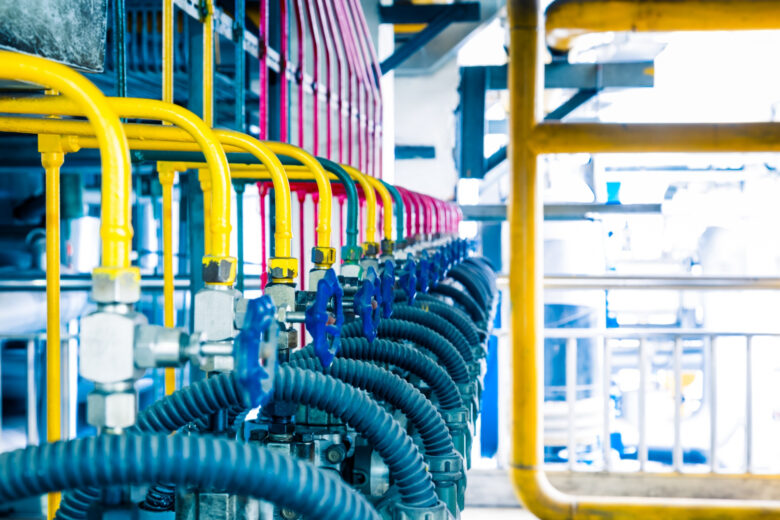
Daily services appear immediate, almost effortless, yet their delivery depends on layered systems that extend far beyond visible endpoints. Power comes to homes, water streams through taps, computerized stages react inside seconds, and transportation frameworks work in nonstop cycles. Each of these results depends on framework that arranges supply, development, preparing, and dispersion over interconnected networks.
These frameworks must work beneath conditions that are seldom uniform. Request vacillates over hours and seasons, framework ages whereas remaining in utilize, and natural or specialized disturbances present changeability. Solidness, in this manner, is not a settled state but an continuous result of coordination between numerous subsystems.
Infrastructure behind every day administrations moreover reflects chronicled advancement. More seasoned frameworks coexist with more up to date advances, making crossover situations where integration gets to be fundamental. Physical resources, computerized stages, and operational systems must adjust to guarantee coherence. The interaction between these components shapes how administrations are conveyed, uncovering frameworks that are both organized and versatile in reaction to changing conditions.
The visible result of a service does not continuously reveal the condition of the system behind it. Water may still arrive while pressure changes, electricity may remain available while reserve capacity falls, or a communication service may stay online while latency increases. These situations show why infrastructure condition cannot be described only through complete availability or failure.
Older and newer components also create differences in monitoring and control. Some parts of a network may provide detailed digital information, while older sections rely on more limited measurements or manual inspection. Keeping these environments connected requires both technical compatibility and operational procedures that account for uneven visibility.
1. Foundational Physical Systems and Dissemination Paths
Beneath ordinary administrations lies a system of physical systems that empower development and network. Electrical frameworks, water dispersion frameworks, roadways, and communication lines frame the spine through which assets and data travel. These systems are planned to span huge geographic ranges, connecting sources of generation with focuses of consumption.
The structure of these frameworks reflects both productivity and excess. Conveyance ways are organized to minimize misfortune and delay, whereas elective courses are joined to keep up benefit in case of disturbance. This double approach permits foundation to bolster ceaseless operation indeed when person components come up short or require maintenance.
An alternative path only provides value when it remains independent enough from the original one. Two distribution routes can appear separate while still depending on the same substation, pumping station, bridge, control center, or communication link. Shared points need to be understood before redundancy can be treated as full protection.
Capacity also shapes how useful an alternative route becomes. A backup path may keep service active but at lower throughput, pressure, speed, or availability. This reduced condition can still be valuable because it prevents a localized disruption from turning into complete service loss.
Physical systems must moreover account for natural conditions. Territory, climate, and urban thickness impact how framework is developed and kept up. These components shape not as it were the format of systems but too their strength beneath shifting circumstances.
2. Vitality Frameworks and Persistent Supply Mechanisms
Energy foundation underpins a wide run of every day administrations, from lighting and warming to computerized communication and transportation. Control era offices, transmission lines, and neighborhood conveyance systems work together to guarantee that vitality is accessible when needed.
Supply instruments must adjust generation with utilization. Request varies all through the day, requiring frameworks that can alter yield in like manner. This adjust is kept up through facilitated control frameworks that screen utilization designs and control supply.
The condition of supply is influenced by both average demand and short peaks. A network can operate comfortably during most of the day while experiencing much tighter margins during particular hours. Understanding this difference requires attention to available capacity as well as current consumption.
Reserve capacity gives systems room to respond when generation changes, equipment becomes unavailable, or demand rises faster than expected. The presence of reserve does not remove disturbance, but it can reduce how strongly a temporary change affects users.
The integration of distinctive vitality sources includes complexity. Conventional centralized era coexists with disseminated frameworks such as neighborhood era units, making numerous focuses of input into the arrange. Overseeing these inputs requires synchronization to keep up steady operation.
Distributed inputs can alter flow patterns that were originally built around more centralized supply. Control systems therefore need information about both production and consumption, because changes can occur from several points instead of one direction alone.
3. Water and Asset Conveyance Systems
Water foundation works through systems that capture, treat, and convey assets over urban and provincial situations. Treatment offices prepare crude water to meet quality guidelines, whereas pipelines convey it to conclusion clients. These frameworks must keep up both weight and virtue all through the conveyance process.
Tokyo’s water supply network delivers treated water through purification facilities, pipelines, and distribution infrastructure serving the city’s residential and commercial areas. Continuous operation and monitoring help maintain stable water delivery across different parts of the metropolitan region.
A metropolitan water system shows how delivery depends on several conditions at the same time. Treatment capacity, reservoir levels, pumping, pressure, pipe condition, and local consumption all influence whether water reaches users inside expected conditions. A problem in one part can alter performance elsewhere without immediately stopping the complete network.
Pressure information can be particularly useful because changes may indicate altered demand, operational adjustment, leakage, or another disturbance inside the distribution system. Flow and quality measurements provide different information, meaning no single reading describes the whole condition of the network.
Resource conveyance expands past water to incorporate gas and other fundamental materials. Each framework has unmistakable characteristics, however they share common standards of stream administration and arrange coordination. Keeping up steady conveyance requires observing of both amount and quality.
Variations in request impact how these frameworks work. Top utilization periods put extra strain on framework, requiring alterations in stream and weight to keep up benefit levels. These alterations happen ceaselessly, reflecting the energetic nature of asset consumption.
Historical demand can help operators anticipate repeating periods of higher use, but unusual weather, local events, or infrastructure changes can still shift actual consumption away from expected patterns. For that reason current measurements remain important even where long-term demand behavior is already known.
4. Communication Framework and Information Exchange
Digital communication depends on foundation that underpins the transmission of information over systems. Fiber-optic cables, remote frameworks, and information centers frame interconnected pathways that empower data to move quickly between areas. These frameworks work at tall speeds, supporting a wide run of services.
Data trade includes both transmission and preparing. Data is directed through systems, handled by servers, and conveyed to clients in organized groups. Each arrange must work dependably to keep up generally framework performance.
A communication path can remain technically connected while its quality becomes reduced. Higher latency, packet loss, congestion, or limited bandwidth can change service behavior before a complete interruption appears. This is especially important for systems that depend on timely control or monitoring information.
The same infrastructure may carry many different services at once. Shared network capacity creates efficiency, but it also creates a condition where unusual demand or failure in one area can influence traffic belonging to another service.
The scale of communication framework presents challenges related to capacity and coordination. Systems must handle huge volumes of information whereas keeping up moo idleness, requiring effective directing and asset allotment mechanisms.
Routing gives networks the ability to move traffic through different pathways, but alternate paths can have different capacity or delay characteristics. Maintaining connectivity is therefore not always the same as maintaining identical performance.
5. Transportation Frameworks and Physical Mobility
Movement of individuals and merchandise depends on transportation foundation that incorporates streets, railroads, ports, and travel frameworks. These systems empower the dispersion of assets and bolster financial action by interfacing diverse regions.
Transportation frameworks must oblige shifting levels of request. Activity designs vacillate all through the day, affected by work plans, commercial movement, and outside variables such as climate. Overseeing these variances requires coordination between foundation plan and operational control.
Transport capacity is not determined only by the physical size of roads, rail lines, or terminals. Signaling, scheduling, intersection control, vehicle availability, loading time, and passenger movement can all change how much useful flow the same infrastructure can support.
This explains why congestion can emerge without a physical failure. The infrastructure may remain fully intact while demand approaches or exceeds the rate at which movement can be processed through a particular section.
The interaction between transportation and other framework frameworks is critical. Conveyance of merchandise depends on both physical development and supporting frameworks such as vitality and communication systems, making interdependencies that shape in general functionality.
A transportation disturbance can also influence other infrastructures indirectly. Delayed maintenance crews, fuel deliveries, replacement equipment, or emergency access can extend the impact of a problem that originally developed elsewhere.
6. Framework Interdependency and Cross-Infrastructure Coordination
Infrastructure behind day by day administrations works as an interconnected framework where person components depend on one another to work viably. Vitality frameworks control communication systems, which in turn back the coordination of transportation and asset dispersion. This interdependency makes a organize of connections that amplify over diverse domains.
Cross-infrastructure coordination includes adjusting operations over these frameworks. Information from one framework may educate choices in another, such as vitality utilization designs impacting transportation planning or communication systems supporting asset administration. These intelligent require components that empower information sharing and synchronized decision-making.
Dependency mapping becomes valuable in this environment because the visible system boundary may not match the real operational boundary. A water system can depend on electricity, telecommunications, chemicals, transport, and digital control, while each of those systems may have dependencies of its own.
This creates both direct and indirect dependencies. A direct dependency might be a pump requiring electrical power, while an indirect dependency could involve maintenance crews needing transportation access to restore the same pump after failure.
The complexity of coordination increments with framework scale. Huge urban situations include different layers of foundation, each with its possess operational necessities. Guaranteeing that these layers work together requires persistent checking and adjustment.
Feedback instruments play a basic part in keeping up coordination. Frameworks create information that reflects their current state, which is at that point utilized to alter operations. This handle makes a energetic environment where framework adjusts to changing conditions in genuine time.
The quality of feedback depends on how current and complete that information remains. Delayed measurements can cause control decisions to respond to a condition that has already changed, while missing measurements can hide which part of a system is under pressure.
Disruptions in one framework can proliferate through others. A disappointment in vitality supply may influence communication systems, which in turn impacts transportation and benefit conveyance. Overseeing these cascading impacts requires strength procedures that constrain the spread of disturbance and bolster recovery.
The speed of a cascade depends on the kind of dependency involved. Some services stop quickly when supporting infrastructure disappears, while others continue temporarily through batteries, storage, local reserves, or manual procedures. These differences can create a short period where the wider condition is not yet obvious.
Technological integration has upgraded the capacity to facilitate over frameworks. Advanced stages give centralized sees of framework execution, empowering more educated decision-making. These stages back the investigation of complex intelligent, permitting frameworks to react more successfully to variability.
Centralized visibility is useful, but it can also introduce a new dependency. If many systems rely on the same monitoring or coordination platform, loss of that platform may reduce operational awareness even while the physical systems themselves remain active.
The adjust between autonomy and interdependency characterizes how framework frameworks work. Whereas each framework must work on its claim, its adequacy is affected by how well it coordinating with others. This adjust shapes the in general soundness and flexibility of every day services.
7. Support Cycles and Foundation Longevity
Infrastructure frameworks require continuous upkeep to stay operational. Components debase over time due to utilization, natural introduction, and fabric weakness. Support exercises point to address these changes some time recently they lead to failure.
Scheduling upkeep includes adjusting operational needs with framework accessibility. Taking components offline for repair or substitution must be facilitated to minimize disturbance to administrations. This coordination requires arranging and flexibility.
Preventive maintenance attempts to act before failure, while corrective maintenance responds after a problem becomes visible. The balance between them depends on asset condition, inspection information, replacement cost, operational consequence, and how much redundancy is available during repair.
Condition data can help prioritize maintenance when not every component can be replaced at once. Repeated faults, unusual temperature, vibration, leakage, pressure changes, corrosion, or other measurements can indicate which assets deserve earlier attention.
Longevity of foundation is affected by both plan and support hones. Frameworks that are frequently kept up and upgraded can proceed to work viably for amplified periods, indeed as request and conditions evolve.
Modernization creates another coordination problem because new equipment must often be introduced while old infrastructure remains active. This can produce temporary hybrid arrangements where procedures, interfaces, and spare components differ across the same network.
8. Checking Frameworks and Operational Visibility
Modern framework depends on checking frameworks that give real-time perceivability into execution. Sensors and information collection apparatuses track factors such as stream rates, vitality utilization, and framework status. This data bolsters decision-making and empowers quick reaction to issues.
Operational perceivability permits for early discovery of peculiarities. Frameworks can recognize deviations from anticipated behavior, inciting examination and remedial activity. This capability upgrades unwavering quality by diminishing the probability of unforeseen failures.
Monitoring becomes more useful when current measurements are compared with normal ranges and past behavior. A single unusual reading may represent a temporary condition, while repeated or slowly changing measurements can indicate developing degradation.
The monitoring system also has its own dependencies. Sensors need power, communication, calibration, and working data pathways. A missing reading may therefore represent either a real infrastructure failure or a failure in the monitoring path itself.
The integration of checking frameworks with control components makes input circles that back nonstop alteration. These circles empower foundation to react powerfully to changing conditions, keeping up steadiness over diverse scenarios.
Automated response can shorten reaction time, but limits must be chosen carefully. A system that responds to every small variation may adjust unnecessarily, while one with wide thresholds may react too late to a developing problem.
9. Asset Assignment and Request Management
Infrastructure frameworks must designate assets in a way that adjusts with request. This allotment includes conveying vitality, water, information, and transportation capacity over distinctive zones and timeframes. Viable assignment guarantees that administrations stay accessible without over the top waste.
Demand administration procedures impact how assets are utilized. Frameworks may alter supply or energize changes in utilization designs to keep up adjust. These alterations reflect the interaction between framework capacity and client behavior.
Demand is not evenly distributed across location or time. One district may approach capacity while another has reserve available, or one time period may experience pressure that disappears later in the day. This means overall system averages can hide local constraints.
Forecasting supports allocation by giving systems an expectation of future demand, but forecasts remain approximations. Real-time measurements provide the correction when actual use differs from the expected pattern.
Variability in request presents challenges in keeping up effective assignment. Sudden increments or diminishes require frameworks to adjust rapidly, highlighting the significance of adaptability in foundation design.
Reserve capacity, alternative routing, stored resources, and controllable loads all provide different ways to absorb this variability. Their usefulness depends on how quickly they can be activated and whether the necessary supporting infrastructure remains available.
10. Strength, Excess, and Versatile Capacity
Infrastructure frameworks are planned to withstand disturbances through strength and repetition. Repetitive components give elective pathways for benefit conveyance, guaranteeing that operations can proceed indeed when portion of the framework fails.
Redundancy should be considered in relation to common failure points. Two pumps may provide backup for one another but still depend on one electrical feed. Two data paths may be logically separate but cross the same physical location. These shared conditions determine how much independence the redundancy truly provides.
A backup component also needs enough capacity to support the required level of service. Some systems may preserve full operation after a failure, while others intentionally move into a reduced mode until normal infrastructure is restored.
Adaptive capacity alludes to the capacity of frameworks to alter to changing conditions. This incorporates reacting to expanded request, joining unused advances, and recouping from disturbances. Adjustment is bolstered by both plan highlights and operational practices.
Recovery does not finish when a failed component simply returns online. Operators may need to verify pressure, load, data consistency, network state, control settings, or downstream conditions before the system can be considered fully stable again.
Testing also influences actual resilience. A backup route or recovery procedure that has never been used under realistic conditions may contain hidden dependencies that remain invisible during normal operation.
The combination of strength and versatility characterizes how framework bolsters day by day administrations beneath changing conditions. Frameworks must keep up usefulness whereas pleasing alter, reflecting the energetic nature of the situations in which they work.
Technical Review and Sources
The infrastructure patterns examined here are considered through their connections between physical distribution, energy supply, water delivery, communication, transportation, maintenance, monitoring, resource allocation, redundancy, and recovery. These connections offer assistance explain why ordinary services depend on systems that remain mostly unseen until performance begins to change.
Tokyo’s water system is utilized as a real-world reference for large metropolitan water distribution. Claims particular to purification, distribution, monitoring, and network operation ought to remain tied to information published by the Tokyo Metropolitan Government Bureau of Waterworks or other primary public documentation.
The broader examples involving energy, transportation, communication, maintenance, and redundancy describe common infrastructure patterns. They do not imply that every utility or city follows the same network layout, reserve strategy, monitoring architecture, or maintenance process.
Last technical review: September 2026
Sources reviewed: Tokyo Metropolitan Government Bureau of Waterworks; public technical material concerning metropolitan water purification and distribution; primary infrastructure and utility documentation.
References
Tokyo Metropolitan Government Bureau of Waterworks. Water Supply in Tokyo.
Tokyo Metropolitan Government Bureau of Waterworks. Water Purification and Distribution Information.
Tokyo Metropolitan Government. Public Infrastructure and Utility Information.