Every day schedules unfurl over two interlaced spaces that seldom show up isolated. Physical activities such as moving through a city, obtaining products, or altering a family environment are progressively went with by advanced forms that record, decipher, and impact those activities. These intuitive frame layered frameworks where unmistakable action and data-driven components work in parallel.
The association between computerized and physical forms is not inactive. It advances persistently as gadgets, foundation, and program frameworks grow their nearness inside ordinary situations. Sensors, systems, and mechanized frameworks interpret physical occasions into information, whereas advanced informational impact physical results. This complementary relationship shapes how assignments are performed, how choices are made, and how situations respond.
Understanding this exchange requires consideration to both obvious and fundamental forms. Physical frameworks give structure and setting, whereas advanced frameworks present coordination, observing, and adjustment. Together, they frame a composite system that characterizes much of modern every day life.
The connection can be followed as a repeated operational path: a physical condition is observed, the observation becomes data, the data travels toward a processing point, a decision is produced, and some form of physical or digital response follows. The same environment then produces new information after that response. Looking at the complete path makes it easier to see why one visible action can depend on several components working correctly.
A useful difference exists between a command being produced and the expected result actually happening. Software may issue a valid instruction while communication is delayed or a physical mechanism cannot respond. For this reason, confirmation from the final state can provide stronger evidence than confirmation that a command was only sent.
Embedded Frameworks and Regular Interaction
Many physical situations presently join inserted frameworks that work without coordinate perceivability. Apparatuses, vehicles, and foundation components contain processors and sensors that empower them to react to conditions and inputs. These frameworks work ceaselessly, deciphering physical states into advanced signals that educate operation.
Interaction with these frameworks regularly happens by implication. Altering a indoor regulator or utilizing a transportation benefit triggers a grouping of advanced forms that amplify past the prompt activity. These forms decipher input, apply modified rationale, and produce reactions that impact physical outcomes.
The complete sequence can involve several states even when the user performs only one action. An input may first be detected, checked, compared against existing conditions, transmitted, and finally converted into another instruction. Failure at any one of these points can produce a similar visible result, even though the technical cause is different.
This is why troubleshooting an embedded environment benefits from separating sensing, processing, communication, and execution. If an expected action does not occur, determining whether the original input was detected is different from determining whether the final actuator received and completed the instruction.
The integration of inserted frameworks presents a level of responsiveness that changes how situations carry on. Physical objects gotten to be portion of broader systems, able of collaboration with other frameworks and adjusting to changing conditions.
Data Capture from Physical Environments
Physical forms produce information through perception and estimation. Sensors distinguish factors such as movement, temperature, area, and weight, changing over these estimations into computerized designs. This information shapes the premise for checking and examination, empowering frameworks to track conditions in genuine time.
The situation and exactness of sensors impact the quality of information captured. Inadequate or loose estimations can influence how frameworks decipher physical situations, driving to varieties in reaction. Reliable information capture bolsters more dependable interaction between computerized and physical systems.
Sensor accuracy and sensor placement should not be treated as the same condition. A sensor can measure its immediate surroundings accurately while being positioned in a location that does not represent the wider environment. Temperature close to a heat source or movement detected only near one entrance can produce technically valid readings that remain incomplete for the decision being made.
Measurements can moreover change because of calibration drift, temporary interference, physical obstruction, or communication loss. Comparing a suspicious value with nearby sensors, earlier measurements, and expected ranges can help determine whether the environment actually changed or the measurement itself became unreliable.
Data streams persistently from physical situations into advanced frameworks. This stream makes a representation of real-world conditions that can be put away, analyzed, and acted upon. The change of physical states into information is a foundational component of advanced systems.
The digital representation remains an approximation of the physical environment. Its usefulness depends on sampling frequency, measurement quality, timestamp accuracy, and whether enough variables are observed to describe the condition relevant to the system.
Digital Control of Physical Systems
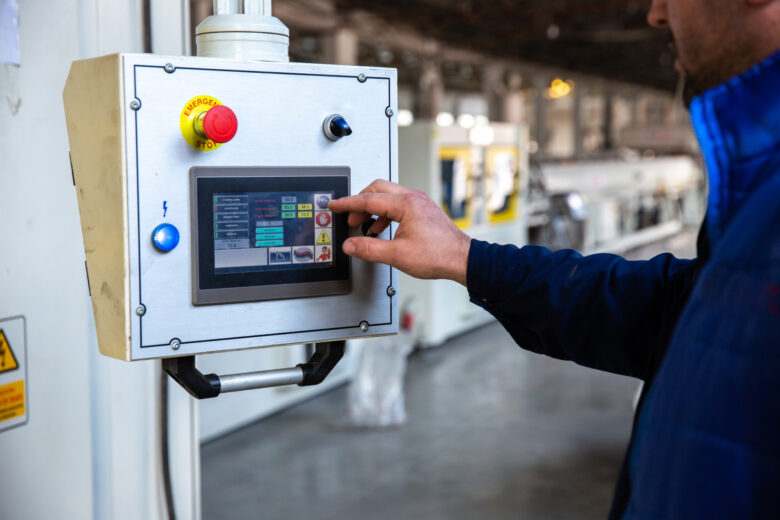
Digital frameworks progressively control physical forms through mechanized instruments. Informational created by program frameworks can alter apparatus, direct natural conditions, or arrange development inside framework. These controls work at changing scales, from person gadgets to huge networks.
The viability of computerized control depends on the accuracy of both input information and yield instruments. Precise information empowers frameworks to make suitable alterations, whereas solid actuators guarantee that these alterations are actualized accurately. The interaction between detecting and control characterizes the responsiveness of the system.
A control chain can be examined through its separate stages. The system first needs a usable measurement, then a decision rule, a communication path, an output command, and a physical mechanism able to complete that command. Confirmation of the resulting state closes the chain and shows whether the intended physical outcome actually occurred.
This distinction matters when diagnosing unexpected behavior. Repeating a software command may have little effect if the problem exists in a mechanical component. Replacing a physical component may likewise have little effect when incorrect sensor information caused the original decision.
Automation presents consistency in how physical forms are overseen. Monotonous errands can be executed with negligible variety, decreasing the impact of manual mediation. In any case, this consistency must oblige changeability in conditions, requiring frameworks to adjust as circumstances change.
Temporal Coordination Between Advanced and Physical Actions
Timing plays a basic part in adjusting computerized forms with physical occasions. Activities must happen inside suitable interims to keep up coherence between frameworks. A delay in computerized handling can influence physical results, whereas untimely activities may disturb expecting sequences.
Synchronization instruments guarantee that advanced enlightening compare with real-world timing. These components facilitate information handling, communication, and execution, keeping up arrangement over frameworks. Changeability in timing presents challenges that must be overseen to protect consistency.
London Underground uses signalling technologies, monitoring platforms, and control centers to coordinate train movement, passenger flow, and daily network operations. These tools support timing, communication, and traffic management across the city’s transport environment.
The transport example makes timing requirements easier to observe because physical movement continues while digital information is being collected and processed. A measurement that correctly described a train position at one moment becomes less useful as time passes and the physical train continues moving. The age of information is therefore part of its operational value.
Timing should also be considered from end to end rather than only at one processing point. Sensor delay, transmission time, processing time, communication back toward the physical system, and actuator response can combine into a larger total delay even when each individual stage appears small.
Temporal coordination expands over different frameworks. Interconnected forms must work inside shared timeframes, requiring synchronization not as it were inside person frameworks but too over broader networks.
Input Circles, Framework Interdependency, and Nonstop Adjustment
The relationship between computerized and physical forms is characterized by persistent input circles that interface perception, investigation, and reaction. Physical activities produce information, which is handled by computerized frameworks, driving to choices that impact consequent physical states. This cycle rehashes ceaselessly, making a energetic framework that advances over time.
Feedback circles work at numerous levels. At a fundamental level, a sensor identifies a alter in temperature, inciting a framework to alter warming or cooling. At a more complex level, amassed information from different sources advises broader alterations that influence whole frameworks. These layers of input make interconnected forms where changes in one zone impact others.
A practical feedback sequence can be separated into measurement, comparison, correction, and confirmation. The measurement describes the current state. Comparison determines how far that state sits from the expected range. Correction changes the system, while confirmation shows whether the change produced the intended result.
Watching only the first three stages can leave an important gap. A command may be issued correctly but fail to create the expected physical change. Confirmation from another measurement closes that gap and allows the system to distinguish between successful control and unsuccessful execution.
System interdependency rises from these intelligent. Advanced and physical components depend on one another to work viably. A disturbance in information stream can influence physical operations, whereas changes in physical conditions can change computerized handling prerequisites. This shared reliance makes a organize of connections that must be overseen carefully.
Continuous alteration is a characterizing characteristic of these frameworks. Conditions once in a while stay inactive, requiring continuous recalibration of forms. Computerized frameworks analyze approaching information to distinguish deviations from anticipated designs, activating reactions that reestablish adjust or optimize performance.
Not every deviation should cause the same response. Small movement around an expected value may represent ordinary variation, while a sustained change can indicate a meaningful shift. Thresholds, duration, and rate of change can therefore be considered together when deciding whether correction is necessary.
The complexity of criticism circles increments with framework scale. In bigger frameworks, different input instruments may work at the same time, connection in ways that are not continuously quickly unmistakable. These intelligent can deliver emanant behavior, where the combined impact of different forms contrasts from the entirety of person actions.
Data idleness impacts how viably criticism circles work. Delays in information transmission or handling can influence the opportuneness of reactions, changing framework behavior. Frameworks must account for these delays, consolidating components that keep up solidness in spite of timing variability.
A delayed feedback loop can create repeated correction around the desired state. If the system makes another adjustment before the effect of the first one becomes visible, it may continue changing in opposite directions. Allowing enough time to observe the result of a correction can therefore be as important as making the correction quickly.
Interdependence too presents challenges related to coordination. As frameworks gotten to be more interconnected, the potential for cascading impacts increments. A alter in one component may engender through the framework, influencing other components in unforeseen ways. Overseeing these intelligent requires an understanding of how frameworks impact one another.
Dependency relationships can be direct or indirect. A control platform may directly require communication with a sensor, while indirectly depending on electricity, network routing, time synchronization, and another service used for authentication. Mapping these relationships can reveal common points that are not visible from the user-facing system.
The adjust between soundness and versatility shapes how input circles work. Frameworks must keep up steady operation whereas remaining adaptable sufficient to react to alter. This adjust characterizes the in general behavior of computerized and physical forms, impacting how they advance over time.
The interaction between ceaseless alteration and framework interdependency reflects a broader move toward coordinates situations. These situations are characterized by continuous interaction between advanced and physical components, making frameworks that are both responsive and complex.
Infrastructure Layers and Handle Integration
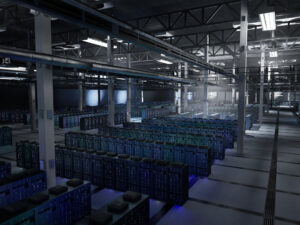
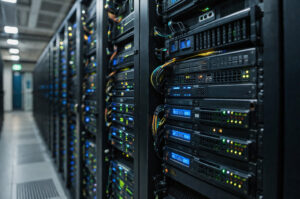
Digital and physical forms are bolstered by foundation layers that encourage interaction. Physical foundation incorporates buildings, transportation systems, and utility frameworks, whereas computerized framework includes servers, systems, and program stages. These layers cross to empower facilitated operation.
Integration over framework layers permits for more comprehensive administration of forms. Information from physical frameworks can illuminate advanced investigation, whereas computerized frameworks can impact physical operations. This integration improves the capacity to screen and control environments.
Integration also creates a need to understand failure boundaries. A physical component can remain healthy while its digital control path is unavailable, or a software service can remain active while the equipment it controls loses power. Describing these as separate states provides more useful information than treating the complete system as simply online or offline.
Hybrid environments can also contain equipment from different generations. Older components may expose limited digital information while newer systems provide detailed state and diagnostic data. Integration has to account for this uneven visibility without assuming that missing information means normal operation.
The arrangement of foundation layers presents conditions that must be overseen. Compatibility between frameworks, unwavering quality of associations, and consistency of information all influence how successfully integration is achieved.
Human Interaction Inside Half breed Systems
Human action remains central to the operation of computerized and physical frameworks. People associated with both spaces, starting activities that trigger forms and reacting to framework yields. These intuitive shape how frameworks are utilized and how they evolve.
Variability in human behavior presents unusualness into framework operation. Frameworks must oblige a wide run of activities, adjusting to distinctive designs and inclinations. This inconstancy impacts how forms are outlined and managed.
Actual use can differ from the sequence expected during design. People may repeat an action when a response appears slow, ignore an instruction, change normal routines, or use several connected functions at the same time. These behaviors become additional inputs that the system must absorb without producing unsafe or inconsistent states.
Clear feedback helps reduce uncertainty during these interactions. When a system shows whether an action was received, remains in progress, failed, or completed, a person has less reason to repeat the same action without knowing its state.
The interaction between human behavior and framework plan reflects a adjust between control and adaptability. Frameworks must give structure whereas permitting for assorted shapes of engagement, guaranteeing that they stay compelling over distinctive contexts.
Spatial Dispersion and Handle Flow
Digital and physical forms are conveyed over space, regularly traversing numerous areas. Physical activities happen in particular situations, whereas advanced forms may work over dispersed systems. This spatial division presents complexity in planning processes.
Data transmission bridges the crevice between physical and computerized spaces, permitting data to move between areas. The proficiency of this transmission influences how rapidly forms can react to changes, affecting in general framework performance.
Distance can influence the system in ways that are not purely geographic. A nearby device may still depend on a remote processing service, while equipment separated by a large physical distance can appear operationally close when connected through reliable low-delay communication. The effective distance between components is therefore shaped by both physical location and network behavior.
Spatial distribution also changes recovery options. A local component may be reachable manually when communication fails, while a remote component may require alternative connectivity or on-site intervention. These conditions influence how resilience procedures are designed.
Spatial conveyance moreover influences how forms are organized. Frameworks must account for contrasts in area, network, and natural conditions, guaranteeing that operations stay reliable over different settings.
Variability, Disturbance, and Framework Resilience
Systems that coordinated computerized and physical forms must fight with changeability and potential disturbance. Changes in natural conditions, specialized disappointments, or startling occasions can influence how forms work. Strength includes the capacity to keep up usefulness in spite of these challenges.
Mechanisms for flexibility incorporate repetition, blunder discovery, and versatile reactions. These components permit frameworks to recuperate from disturbances and proceed working beneath changed conditions. The nearness of flexibility impacts how frameworks are planned and managed.
Resilience does not necessarily require every function to remain available. A hybrid system may preserve a smaller group of essential functions while advanced automation, remote access, or optimization features remain temporarily unavailable. This degraded state can prevent one failed dependency from stopping the complete physical process.
Redundancy should also be examined for shared dependencies. Two communication links may still use one power source, two control systems may depend on one network location, or duplicated digital services may still control one physical mechanism. Duplication alone does not guarantee independence.
Recovery requires more than returning a component to an active state. Data consistency, sensor readings, actuator position, pending commands, and communication status may need to be checked before normal automated operation resumes. Otherwise a technically restored component can rejoin the system with a state that no longer matches surrounding components.
Variability remains an characteristic viewpoint of these frameworks. Or maybe than disposing of inconstancy, frameworks are organized to suit it, guaranteeing that forms stay steady indeed as conditions alter.
Technical Review and Sources
The digital and physical relationships examined here are considered through sensing, measurement quality, control paths, timing, feedback, infrastructure integration, human interaction, spatial distribution, and recovery. Looking at these stages separately gives a more useful way to understand why one visible action can depend on several hidden processes.
London Underground is utilized as a real-world reference for the interaction between physical transport movement and digital signalling, monitoring, and operational control. Claims particular to London Underground operation ought to remain connected to Transport for London documentation and other primary technical material rather than assumptions about how every railway network operates.
The examples involving sensors, automated control, hybrid infrastructure, feedback, and redundancy describe broader system patterns. They do not imply that every transport network, building, device, or control environment uses identical technology or operational procedures.
Last technical review: September 2026
Sources reviewed: Transport for London material concerning London Underground signalling and network operation; primary transportation and infrastructure documentation; technical material concerning feedback control, sensors, and physical-digital systems.
References
Transport for London. London Underground and Network Operations.
Transport for London. Signalling and Control Systems Information.
Transport for London. Safety and Operational Information for London Underground.