Movement within contemporary environments rarely occurs in isolation. Each interaction—whether computerized, physical, or procedural—triggers reactions over layers of associated frameworks. These reactions are frequently inconspicuous, some of the time deferred, and as often as possible imperceptible to those working inside them. A basic activity, such as starting a exchange, altering a setting, or moving through a space, starts a cascade that voyages past the quick interface. What shows up as a contained handle is regularly dispersed over foundations that expand distant past a single point of control.
Interdependence has ended up a characterizing characteristic of cutting edge frameworks. It shapes how foundations are planned, how disappointments engender, and how soundness is kept up beneath moving conditions. The complexity does not emerge exclusively from the number of components, but from the thickness of connections between them. Each framework depends not as it were on its inner consistency but moreover on the unsurprising behavior of adjoining frameworks. As situations develop more coordinates, boundaries gotten to be less particular, and the results of nearby changes grow outward. Understanding these flow requires consideration to how frameworks interface, adjust, and impact one another beneath persistent operation.
The condition of an interdependent environment cannot continuously be judged by whether person components remain active. A framework may proceed working whereas one of its dependencies enters a slower, constrained, or partially available state. These changes can travel through the environment without creating an immediate total failure, making degraded operation more troublesome to recognize than a clear interruption.
This is why dependency structure matters beside component quality. Two frameworks with comparable individual reliability can behave differently if one depends on shared resources, tightly connected services, or a single supporting pathway. The shape of the connections can influence how far a disturbance travels and how quickly it becomes visible.
1. Layered Structures and Covered up Dependencies
Modern situations are once in a while developed as single, bound together frameworks. Instep, they are amassed through layers, each dependable for a particular work. These layers regularly work autonomously in plan but stay firmly connected in execution. A transportation organize, for illustration, depends on signaling frameworks, vitality conveyance, planning calculations, and client interfacing, all of which work as isolated layers however must adjust continuously.
Dependencies inside these layers are not continuously obvious. A few are inserted in conventions or bequest setups that continue over time. Others develop through incremental integration, where unused components depend on presumptions built up by more seasoned frameworks. As a result, a alter in one layer can present unintended results in another, indeed if no coordinate association shows up obvious.
A hidden dependency regularly becomes visible only when its ordinary condition changes. A service may appear independent during normal operation because the supporting component responds reliably. Once that component slows, changes format, or becomes unavailable, the relationship becomes easier to trace.
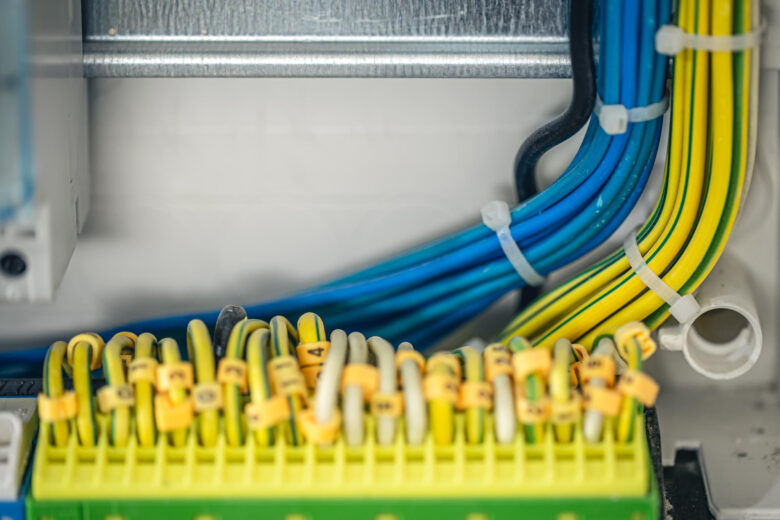
Dependency mapping can help uncover these connections before failure occurs. Following which systems provide data, power, communication, storage, validation, or control gives a more complete picture than examining each layer alone. Shared dependencies deserve particular attention because numerous apparently separate services may rely on the same underlying component.
This layered course of action makes both versatility and delicacy. Frameworks can retain disturbances inside one layer if others stay steady. In any case, when conditions adjust in particular ways, disturbances can bypass control and proliferate over different layers simultaneously.
2. Interaction Between Independent Systems
Systems outlined autonomously regularly ended up interconnected through shared situations. These intelligent are not continuously arranged. Instep, they emerge from covering utilize cases, shared assets, or the require for interoperability. A installment framework may depend on broadcast communications framework, which in turn depends on control lattices and information steering mechanisms.
Online payment services frequently demonstrate this type of interaction, relying on communication networks, authentication platforms, and financial processing systems that were developed as separate environments.
The visible payment interaction may therefore depend on infrastructure outside the direct control of the payment application. Communication availability, identity checks, transaction processing, and financial response can each come from separate systems. A delay in any one can change the outcome seen by the user even when the payment interface itself remains operational.
This creates a difference between ownership and dependency. A system may not own the service it depends on, yet its own reliability can still be limited by that external component. Understanding this relationship becomes important when defining responsibility for monitoring, fallback, and recovery.
The challenge lies in adjusting frameworks that were not initially expecting to work together. Contrasts in plan reasoning, overhaul cycles, and operational needs can present grinding. These irregularities may not be promptly clear but can surface beneath stretch conditions, such as top request or halfway framework failure.
Coordination components are presented to oversee these intuitive, but they regularly work at a higher level than the frameworks themselves. This makes a circumstance where nearby optimizations inside one framework may strife with worldwide solidness over the network.
3. Cascading Impacts and Framework Behavior
A characterizing include of forbid frameworks is the potential for cascading impacts. When one component comes up short or carries on out of the blue, the affect can amplify past its quick scope. These cascades do not continuously take after direct ways. Instep, they move through interconnected pathways that may intensify or hose the unique disturbance.
Power grid disruptions often illustrate how cascading behavior develops, where failures in one area can influence connected systems beyond the original point of disturbance.
The 2003 Northeast Blackout affecting New York and other parts of North America demonstrated how failures within interconnected power systems can spread beyond their original location. The event showed how dependencies between electricity networks, transportation systems, communication services, and daily operations can become visible when a normally stable system is disrupted.
This event gives a useful view of cascade behavior because the original technical disturbance did not remain confined to one visible service. Loss of electricity altered conditions for transportation, communication, buildings, businesses, and public activity. Systems that normally appeared separate became connected through the shared dependency on available power.
A cascade does not require every downstream system to fail in the same way. One service may stop, another may move into backup operation, and another may continue with reduced capacity. The wider effect depends on how each connected system responds to the new condition created by the original disturbance.
Cascading behavior is affected by the structure of conditions. Frameworks with firmly coupled components are more vulnerable to fast proliferation, whereas freely coupled frameworks may delay or confine disturbances. In any case, free coupling can too present idleness in reaction, permitting issues to amass some time recently getting to be visible.
In numerous cases, cascading impacts uncover conditions that were already unrecognized. These covered up associations ended up clear as it were when frameworks work exterior ordinary conditions. The coming about behavior can show up unusual, indeed when each person component capacities agreeing to its design.
4. Organized Interdependency and Systemic Stability
Stability inside forbid situations does not develop from the unwavering quality of person components alone. It depends on the coordination of connections over the whole arrange. This coordination is affected by timing, synchronization, and the capacity of frameworks to adjust to changing inputs.
Networked interdependency presents input circles that shape framework behavior over time. These circles can strengthen steadiness by adjusting deviations, or they can increase flimsiness when remedial components are deferred or misaligned. The adequacy of these circles depends on the precision of data traded between frameworks and the speed at which reactions are executed.
A feedback response can become less useful when it is based on conditions that have already changed. Delay in observation, communication, or processing means a correction may be technically correct for an earlier state but poorly matched to the current one. The faster conditions move, the more important this difference becomes.
Watching response time together with the direction of change can help separate temporary variation from a developing problem. A short disturbance may return toward normal without intervention, while continuing movement away from expected ranges can indicate that control mechanisms are not restoring balance.
One basic figure is the arrangement of operational edges. Each framework works inside characterized limits, but these limits are not continuously consistent. When edges vary essentially, one framework may enter a debased state whereas another proceeds typical operation, making lopsidedness. This awkwardness can spread, especially when frameworks depend on each other for approval or input.
Temporal elements too play a central part. Frameworks that work on distinctive time scales may battle to arrange viably. A real-time observing framework may distinguish changes quicker than a batch-processing framework can react. This jumble presents delays that can influence generally stability.
Adaptation instruments are presented to oversee these complexities. These components incorporate excess, stack adjusting, and energetic reconfiguration. Be that as it may, adjustment itself presents extra conditions. Frameworks must depend on checking apparatuses, choice systems, and communication channels to alter their behavior. If any of these supporting components come up short, the capacity to adjust is compromised.
The concept of systemic steadiness subsequently expands past keeping up operational coherence. It includes overseeing the connections between frameworks in a way that permits for controlled variety without activating broad disturbance. This requires an understanding of both the structure of conditions and the flow of interaction beneath shifting conditions.
5. Resource Sharing Across Systems
Interdependence frequently shows through shared assets. These assets may incorporate vitality, information capacity, computational capacity, or physical framework. Sharing presents effectiveness but moreover makes focuses of dispute. When different frameworks depend on the same asset, vacillations in request can influence all participants.
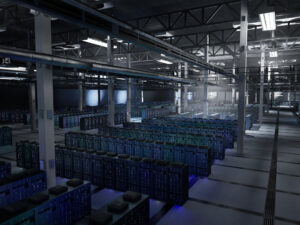
Cloud computing environments provide a common example, where multiple services depend on shared processing capacity, storage resources, and network infrastructure.
Shared infrastructure creates efficiency by allowing capacity to be used where it is needed instead of remaining dedicated and unused. The same arrangement can make contention when several services increase demand at the same time. The effect may appear as slower response, reduced throughput, delayed work, or restricted access before complete resource exhaustion occurs.
Monitoring normal utilization alone may not reveal this condition. Short peaks, queue growth, memory pressure, storage activity, or network saturation can affect particular services even when average resource use appears acceptable. Looking at both demand and available reserve capacity gives a clearer picture of how much variation a shared environment can absorb.
Resource assignment components are utilized to oversee these intelligent. These components prioritize certain forms, disseminate capacity, or constrain get to beneath obliged conditions. In any case, prioritization choices can impact framework behavior in unintended ways. A framework that gets diminished get to to a asset may alter its operation, possibly influencing other frameworks that depend on its output.
The complexity increments when assets are preoccupied. Virtualized situations, for case, convey computational assets powerfully. Whereas this progresses utilization, it moreover darkens the physical limitations basic the framework. As a result, conditions gotten to be more troublesome to trace.
6. Worldly Misalignment and Operational Drift
Systems once in a while work in idealize synchronization. Contrasts in overhaul recurrence, handling speed, and reaction time make worldly misalignment. Over time, these contrasts can lead to operational float, where frameworks steadily move out of arrangement with each other.
Operational float may not cause quick issues. Frameworks can proceed working inside worthy parameters indeed when somewhat misaligned. In any case, as float collects, the probability of struggle increments. A framework may depend on obsolete data, or it may react to conditions that no longer exist.
Drift can develop from many small differences rather than one visible event. Clocks, update intervals, communication delay, cache behavior, and processing queues can each contribute a limited amount of variation. When these differences remain within tolerance they may have little effect, but accumulation can eventually move systems beyond the conditions expected by surrounding components.
The acceptable amount of drift depends on the work being performed. A process that only needs approximate recent information can tolerate more delay than one depending on strict ordering or current state. Treating every dependency with the same timing requirement can therefore create either unnecessary synchronization or insufficient control.
Correction instruments are fundamental to realign frameworks. These instruments may include occasional synchronization, approval checks, or recalibration forms. The viability of these instruments depends on their capacity to identify float early and apply rectifications without disturbing continuous operations.
7. Interface Plan and Reliance Visibility
Interfaces play a significant part in forming how frameworks connected. They characterize the boundaries through which data and control signals pass. Well-designed interfacing can streamline intelligent by standardizing communication and diminishing ambiguity.
However, interfacing can moreover darken basic conditions. By showing a rearranged see of framework behavior, they may cover up the complexity of intuitive happening behind the interface. This can lead to presumptions that do not reflect real framework behavior.
An interface may show only success or failure while the underlying process has several intermediate states. A request can be accepted, queued, partially completed, awaiting confirmation, or recovering from delay even if the surface gives little indication of those differences. This makes internal visibility important for operators even when external simplicity is desirable.
Clear state information can shorten the path to identifying which dependency is responsible for a problem. Response codes, timestamps, health information, queue state, and dependency status give more useful evidence than a general indication that an operation failed.
Visibility of conditions gets to be a key thought. Frameworks that uncover significant data approximately their state and intuitive permit for way better coordination. Alternately, frameworks that constrain perceivability may make dazzle spots, making it troublesome to expect or analyze issues.
8. Versatility Through Repetition and Distribution
Interdependent frameworks regularly join repetition to make strides flexibility. Excess includes copying basic components or forms so that disappointment in one component does not result in total framework breakdown. Dispersion encourage upgrades strength by spreading components over distinctive areas or environments.
These methodologies decrease the probability of single focuses of disappointment. Be that as it may, they present extra layers of coordination. Repetitive frameworks must stay synchronized, and disseminated frameworks must oversee communication over shifting conditions.
Redundancy gives the most value when the alternative component does not share the same critical dependency as the primary one. Two services placed in different logical locations may still fail together if they depend on the same power source, network route, storage layer, or control system.
Testing the transition to backup operation is therefore different from only confirming that the backup exists. A secondary component can appear healthy while unused and still fail to take over correctly when routing, synchronization, permissions, or current state become important.
Resilience is in this manner not exclusively a work of duplication. It depends on the capacity to oversee the connections between repetitive and dispersed components. Misalignment between these components can decrease the adequacy of versatility strategies.
9. Thick Interdependency in Urban and Computerized Environments
Urban situations and advanced foundations display especially tall levels of interdependency. Transportation frameworks, communication systems, vitality lattices, and open administrations are interconnected in ways that reflect both physical nearness and utilitarian necessity.
In urban settings, physical framework makes coordinate conditions. Streets, utilities, and buildings are connected through shared space and asset dispersion. In computerized situations, conditions are intervened through information trade and organize network. These situations regularly cover, as advanced frameworks oversee and optimize physical processes.
Smart city platforms increasingly combine these layers by connecting transportation systems, utility networks, and digital monitoring tools within the same operational environment.
This overlap makes a condition where a digital issue can influence physical operation and a physical disturbance can reduce digital visibility. A communication interruption may limit sensor data or remote control, while loss of electrical supply may affect both field equipment and the digital services expected to monitor it.
The more tightly these environments are connected, the more useful it becomes to identify common dependencies before disturbance occurs. Mapping electricity, communication, data, location, and control relationships can show where several services depend on the same underlying infrastructure.
Density of interdependency increments both proficiency and complexity. Frameworks can arrange more viably when closely associated, but they moreover gotten to be more delicate to disturbances. A localized issue can have far-reaching impacts due to the concentration of dependencies.
10. Versatile Behavior and Persistent Reconfiguration
Modern frameworks are progressively outlined to adjust in genuine time. Versatile behavior includes observing conditions, assessing choices, and altering operations appropriately. This prepare permits frameworks to react to changing situations without manual intervention.
Continuous reconfiguration is a key viewpoint of adjustment. Frameworks may modify their structure, redistribute assets, or adjust intelligent with other frameworks. These changes are frequently robotized, depending on predefined rules or machine-driven choice processes.
Automation can make response quicker than manual intervention, but the quality of the response remains connected to the information and rules used to trigger it. Incomplete data, delayed measurements, or an incorrect threshold can produce an adjustment that does not match the actual system condition.
Changes also require enough time to reveal their result. If another reconfiguration begins before the first one has produced measurable effect, the system can continue moving between states instead of settling inside an acceptable range. Feedback timing therefore becomes part of the adaptive process itself.
Adaptation improves adaptability but moreover presents complexity. Frameworks must keep up mindfulness of their environment and of other frameworks with which they connected. This mindfulness depends on exact information and solid communication channels.
As frameworks adjust, their connections with other frameworks may move. Unused conditions can shape, whereas existing ones may debilitate or vanish. This energetic nature of interdependency requires continuous perception and alteration to keep up soundness inside the environment.
Technical Review and Sources
The interdependency patterns examined here are considered through their connections between layered systems, shared resources, timing, cascading effects, operational drift, interfaces, redundancy, and adaptive response. These connections offer assistance explain why stability depends on both component condition and the structure of dependencies around each component.
The 2003 Northeast Blackout is utilized as a real-world reference because it provides a documented example of disruption spreading across a large interconnected electricity system and influencing activity outside the original technical point of failure. Claims specific to the event should remain connected to primary government and industry investigations rather than later simplified descriptions.
Examples involving online payments, cloud environments, and smart-city systems describe broader patterns of interdependency. They do not imply that every provider or city uses the same technical architecture, dependency structure, or control methods.
Last technical review: September 2026
Sources reviewed: U.S.–Canada Power System Outage Task Force; U.S. Department of Energy blackout documentation; official electric reliability material concerning the 2003 Northeast Blackout.
References
U.S.–Canada Power System Outage Task Force. Final Report on the August 14, 2003 Blackout in the United States and Canada.
U.S. Department of Energy. August 2003 Northeast Blackout Resources.
North American Electric Reliability Council. Technical Analysis of the August 14, 2003 Blackout.