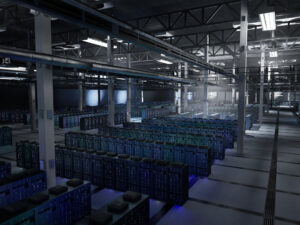

Day by day computerized action unfurls through interfacing that show up straightforward and prompt, however underneath those surfaces work layered program frameworks planning endless sums of information and preparing. Sending a message, spilling media, or completing a exchange includes intuitive between applications, servers, databases, and systems that must work in close genuine time. These intelligent happen persistently, regularly without obvious markers of the basic complexity.
The program supporting ordinary computerized administrations is outlined to handle inconstancy. Utilization designs move all through the day, request varies unusually, and frameworks must adjust without hindering benefit accessibility. Unwavering quality, responsiveness, and adaptability characterize how these stages work, requiring coordination over conveyed components.
Modern computerized administrations depend on computer program designs that partitioned obligations into unmistakable layers, permitting frameworks to advance without disturbing center usefulness. These layers oversee client input, handle demands, store information, and convey comes about back to clients. Understanding these frameworks includes analyzing how these components connected, how they react to changing conditions, and how they keep up consistency over situations that are continually in motion.
One request can therefore pass through more parts than what becomes visible to the person using the service. An interface can accept the activity, a backend service can inspect it, another component can request stored information, and a network path can carry results between them. The final response only appears after enough of these separate parts complete their work.
Looking at each stage separately also gives a more useful way to understand slow behavior. A page that responds slowly does not automatically indicate that the interface itself has a problem. Processing, database recovery, outside service response, network transfer, or overloaded resources can each add a portion of the final waiting time.
Application Interfacing and Client Interaction Layers
Digital administrations start with application interfacing that interpret client activities into organized demands. These interfacing may take the frame of versatile applications, web stages, or inserted frameworks, each outlined to capture input and display yield in a usable organize. Whereas interfacing show up clear, they serve as portals to complex handling systems.
The interaction layer must handle a run of inputs, from basic commands to nonstop streams of information. It deciphers these inputs, changes over them into standardized groups, and advances them to basic frameworks for handling. This interpretation guarantees that client activities can be caught on by computer program components working more profound inside the system.
A request can have different states before the user receives a final result. It may be accepted locally, waiting for network transmission, received by a backend component, still processing, or waiting for another service. Showing these states differently can reduce uncertainty when completion is not immediate.
Repeated user activity is another condition this layer has to manage. If a response appears delayed, the same button may be pressed again or the same request submitted another time. Systems handling operations such as payments or orders need ways to prevent an uncertain response from turning into unintended duplicate work.
Responsiveness at this layer is basic. Delays or irregularities can influence how clients see the benefit, indeed when more profound frameworks work accurately. The interface hence acts as both a communication point and a execution indicator.
Backend Handling and Benefit Logic
Behind the interface, backend frameworks oversee the center rationale that drives advanced administrations. These frameworks prepare approaching demands, apply rules, and produce reactions. The rationale inserted inside these frameworks decides how administrations carry on beneath distinctive conditions.
Backend preparing frequently includes different administrations working together. A single ask may trigger a grouping of operations over diverse modules, each dependable for a particular work. This secluded approach permits frameworks to scale and adjust, but it too presents complexity in coordination.
A request path can be examined by following where time is spent. If an operation takes 800 milliseconds, for illustration, that total can include network travel, application processing, database work, and calls toward another service. Measuring only the complete response reveals that the request is slow but does not show which stage created most of the delay.
Logs and request identifiers can provide another view of this path. When the same identifier is carried between components, events from separate services can be placed into one sequence. This makes it easier to see whether processing stopped at one component, waited on another, or continued normally but slowly.
The plan of benefit rationale impacts both execution and adaptability. Frameworks must prepare demands effectively whereas remaining versatile to changes in prerequisites or utilization designs. This adjust shapes how backend structures are structured.
Data Capacity Frameworks and Recovery Mechanisms
Digital administrations depend on the capacity and recovery of information. Databases and capacity frameworks oversee data extending from client profiles to value-based records and substance libraries. These frameworks must give both unwavering quality and openness, guaranteeing that information can be recovered rapidly and accurately.
Different sorts of capacity frameworks are utilized depending on the nature of the information. Organized databases organize data into characterized mappings, whereas unstructured capacity obliges more adaptable information designs. The choice of framework influences how information is gotten to and processed.
Storage performance can change according to the kind of operation being performed. Reading one indexed record is different from scanning a large collection, updating many records, or waiting while several operations compete for the same information. These differences can become visible as application delay even when the database remains fully available.
Indexes can reduce the amount of information that must be examined for particular queries, but they also require storage and maintenance when data changes. Adding an index therefore is not automatically an improvement for every workload. The usefulness depends on which information is requested, how frequently it changes, and how queries are structured.
Retrieval components are planned to minimize inactivity. Productive ordering and inquiry optimization permit frameworks to find and convey information quickly, supporting the responsiveness of advanced services.
A slow retrieval can also influence components farther up the request chain. Application workers may remain occupied while waiting for database results, which leaves fewer resources available for new requests. What begins as storage delay can therefore become broader service pressure under enough demand.
Network Communication and Information Transfer
Communication between components of computerized administrations depends on organize conventions that encourage information exchange. Demands move from client gadgets to servers, and reactions take after the switch way. This trade must happen dependably, indeed beneath changing arrange conditions.
Data exchange includes breaking data into parcels, transmitting them over systems, and reassembling them at the goal. This prepare presents potential delays and inconstancy, which frameworks must oversee to keep up steady performance.
Network condition cannot always be described only as connected or disconnected. Latency can rise, packets can be lost, bandwidth can become constrained, and routes can change while communication still continues. Applications can therefore experience degraded performance without a complete network outage.
Retries can recover some temporary communication failures, but they also create additional traffic and work. When a downstream service is already overloaded, aggressive retries from many clients can increase the same pressure that caused the first failures. Retry timing and limits become important rather than simply repeating until success.
Network proficiency influences the by and large encounter of computerized administrations. Optimized communication decreases inactivity and progresses unwavering quality, supporting consistent interaction between clients and systems.
Conveyed Designs, Versatility, and Framework Coordination
The program behind regular advanced administrations progressively works inside conveyed designs, where handling and information capacity are spread over numerous areas or maybe than centralized in a single framework. This dispersion permits administrations to scale evenly, pleasing developing request by including extra hubs to the organize. Each hub contributes to handling demands, putting away information, or overseeing particular errands inside the system.
Scalability develops as a characterizing characteristic of these designs. As utilization increments, frameworks must handle higher volumes of demands without corruption in execution. Conveyed frameworks accomplish this by adjusting stack over numerous servers, guaranteeing that no single component gets to be a bottleneck. Stack adjusting components coordinate activity to accessible assets, keeping up productivity beneath changing conditions.
Netflix uses distributed software architecture to support streaming activity across different regions and changing demand levels. Its infrastructure combines cloud resources, automated deployment processes, and monitoring tools to maintain performance during variations in user activity.
The Netflix example makes the relation between user demand and distributed capacity easier to see. Streaming demand does not remain identical through every hour or location, meaning infrastructure needs to deal with movement in both volume and geographic activity rather than one fixed level of use.
Distributed delivery also separates parts of the user experience. Content delivery, account functions, application services, monitoring, and supporting systems do not need to exist as one single component. This separation can allow different parts to scale or recover differently, but it creates more relationships that have to remain coordinated.
Coordination between disseminated components is fundamental. Frameworks must guarantee that information remains reliable over hubs, indeed as it is gotten to and adjusted at the same time. This necessity presents complexity, as synchronization forms must accommodate contrasts and keep up judgment without presenting noteworthy delays.
Consistency requirements are not identical for every kind of information. Some data can tolerate a short delay before all copies agree, while other operations require tighter control because an outdated value could change the result of the next action. Choosing a consistency approach therefore depends on what the information represents and how it is used.
Fault resistance is another basic viewpoint of disseminated frameworks. Components may come up short or ended up briefly inaccessible, and the framework must proceed working in spite of these disturbances. Excess and replication techniques permit information and handling capabilities to be protected, guaranteeing progression of service.
Redundancy becomes more useful when copies do not share the same failure point. Several application instances may still depend on one database, network path, identity provider, or region. Counting instances alone can therefore give an incomplete picture of actual fault resistance.
The interaction between versatility and coordination shapes how disseminated frameworks are outlined. Expanding the number of hubs progresses capacity but too increments the complexity of overseeing communication and synchronization. Frameworks must adjust these components to keep up both execution and reliability.
Latency gets to be a central thought in disseminated situations. Information may travel over geographic separations, presenting delays that influence reaction times. Frameworks moderate these delays through methods such as caching and edge computing, which bring information closer to users.
Caching can shorten repeated access by avoiding the complete original retrieval path, but cached information also has a lifetime. Keeping it too long can return older state, while refreshing too often reduces some of the performance advantage. The appropriate balance depends on how quickly the underlying information changes.
Distributed structures too impact how overhauls and changes are executed. Adjustments must be sent over different components, requiring cautious coordination to maintain a strategic distance from irregularities. This handle reflects the energetic nature of advanced program frameworks, where nonstop upgrades are common.
A deployment can therefore create a temporary period where different versions operate at the same time. Compatibility between old and new components matters during this interval, especially when request traffic can reach either version before the rollout becomes complete.
The advancement toward disseminated frameworks reflects the scale and complexity of modern computerized administrations. Or maybe than depending on centralized control, these frameworks work through facilitated intuitive between various components, each contributing to the in general usefulness of the service.
Security Layers and Get to Management
Security components are coordinates all through computerized benefit structures to ensure information and guarantee controlled get to. Confirmation frameworks confirm client characters, whereas authorization systems decide what activities clients can perform inside the system.
Encryption ensures information amid transmission and capacity, anticipating unauthorized get to. These measures work persistently, defending data as it moves between components and dwells inside capacity systems.
Authentication and authorization answer related but different questions. Authentication establishes which identity is making the request, while authorization determines whether that identity can perform the requested action. Keeping these stages separate makes access decisions easier to reason about and audit.
Permissions also need to reflect the amount of access actually required. Giving every service or account broad privileges may simplify configuration but increases the impact if one credential is exposed or one component behaves incorrectly.
Access administration includes characterizing parts and authorizations that direct how clients connected with administrations. These controls guarantee that delicate operations are limited, keeping up the judgment of the system.
Access events can also contribute to operational visibility. Failed authentication, unexpected privilege use, or unusual request patterns can provide evidence that deserves investigation even when normal service functions remain available.
Software Upgrades and Persistent Deployment
Digital administrations advance through continuous overhauls that present unused highlights, settle issues, and move forward execution. Persistent arrangement hones permit these upgrades to be connected without noteworthy disturbance to benefit availability.
Update forms must be carefully overseen to guarantee compatibility over framework components. Changes in one portion of the framework can influence others, requiring coordination to keep up stability.
A controlled rollout can reduce how many users or systems are exposed to an unexpected problem at once. Instead of changing every instance together, a new version can be introduced to a smaller portion, observed, and expanded after its behavior appears stable.
Rollback provides another control when a deployment creates problems. Its usefulness depends on whether application, configuration, and data changes remain compatible with the earlier version. Returning software alone may not completely restore the previous condition if other state changed during deployment.
The recurrence and scope of upgrades reflect the energetic nature of computer program frameworks. Normal overhauls contribute to framework flexibility and versatility, permitting administrations to react to changing conditions and requirements.
Monitoring Frameworks and Execution Analysis
Monitoring frameworks track the execution of advanced administrations, collecting information on measurements such as reaction time, blunder rates, and framework stack. This information gives understanding into how frameworks are working and where enhancements may be needed.
Performance examination includes translating this information to recognize designs and peculiarities. Frameworks may alter their behavior based on these bits of knowledge, optimizing asset assignment and moving forward efficiency.
Average response time alone can hide short periods of poor performance. Looking at higher percentiles beside averages can show whether a smaller group of requests experiences much longer delays even while the overall average remains acceptable.
Metrics, logs, and traces also describe different parts of system behavior. Metrics show numerical movement over time, logs record individual events, while traces can connect stages belonging to one distributed request. Combining these views can make diagnosis more precise than relying on one signal alone.
Monitoring too bolsters unwavering quality by empowering early location of issues. Provoke distinguishing proof of issues permits for speedier determination, minimizing the affect on users.
Monitoring itself must remain observable. Missing metrics can indicate that the monitored service failed, but they can also mean that the collection or communication path stopped working. Distinguishing between these conditions prevents lack of data from being automatically treated as normal operation.
Integration with Outside Administrations and APIs
Digital administrations frequently associated with outside frameworks through application programming interfacing. These integrative amplify usefulness, permitting administrations to get to extra information or capabilities given by other platforms.
APIs encourage communication between frameworks, empowering information trade in standardized designs. This interoperability underpins the advancement of complex administrations that depend on different outside components.
An external API places part of the request path outside direct control of the primary service. Its latency, availability, response format, limits, or authentication behavior can influence the final result even while the local application continues operating correctly.
Timeouts provide a boundary for how long one component waits. Without a suitable limit, requests can remain occupied waiting for a dependency that may not respond. A timeout does not fix the external failure, but it prevents waiting from continuing without control.
The integration of outside administrations presents conditions that impact framework behavior. Accessibility and execution of these outside components can influence the by and large usefulness of the service.
Fallback behavior depends on what the external service provides. Some functions can continue with cached or reduced information, while others cannot safely complete without a confirmed response. Treating every dependency identically can therefore produce poor recovery decisions.
Resource Assignment and Framework Efficiency
Efficient utilize of computational assets is fundamental for keeping up execution in computerized administrations. Frameworks apportion preparing control, memory, and capacity based on request, guaranteeing that assets are utilized effectively.
Dynamic allotment permits frameworks to alter to changing conditions. Amid periods of tall request, extra assets may be designated, whereas lower request permits for diminished utilization. This adaptability contributes to by and large efficiency.
Resource pressure can become visible before complete exhaustion. Growing queues, longer processing time, memory pressure, increased storage waiting, or rising connection use can show that a component is approaching its useful limit.
Scaling also takes time. If new resources require several minutes to become ready, a sudden demand increase can affect performance before additional capacity enters service. Capacity planning therefore has to consider both how much resource can be added and how quickly it becomes usable.
Resource administration too includes adjusting competing requests inside the framework. Prioritization instruments guarantee that basic forms get the fundamental assets, keeping up framework stability.
Prioritization can preserve important work when capacity becomes constrained, but it changes which requests experience delay first. Monitoring should therefore examine the behavior of different workload groups rather than only one combined utilization number.
Technical Review and Sources
The software structures examined here are considered through the complete request path, including application interaction, backend processing, storage, network transfer, distributed coordination, security, deployment, monitoring, APIs, and resource assignment. Looking at these stages separately offer assistance show why one visible delay can originate in a component far from the user interface.
Netflix is utilized as a real-world reference for large-scale distributed streaming infrastructure. Claims particular to its architecture, cloud use, deployment practices, content delivery, and monitoring ought to remain tied to Netflix Technology Blog, Netflix Open Connect documentation, and other material published directly by Netflix rather than assuming that every streaming platform operates identically.
Examples concerning indexing, caching, retries, distributed tracing, rollouts, timeouts, redundancy, and scaling describe common software engineering mechanisms. Their actual configuration depends on workload, architecture, consistency requirements, and failure tolerance rather than one universal setting.
Last technical review: September 2026
References
Netflix Technology Blog. Technical articles covering Netflix distributed systems, reliability, deployment, observability, and cloud architecture.
Netflix Open Connect. Documentation concerning Netflix content delivery infrastructure.
Amazon Web Services. Architecture and distributed systems documentation.
National Institute of Standards and Technology. Computer security and access-control publications.