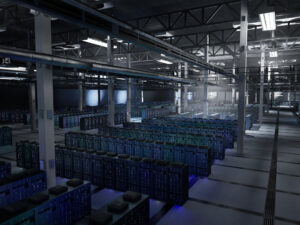
Digital activity unfolds continuously, often without visible interruption. Messages are sent, videos stream, transactions complete, and data moves between devices at a scale that exceeds immediate perception. Beneath this constant flow lies a system of interconnected networks that manage vast volumes of traffic every second. These networks do not operate as a single entity but as a distributed structure composed of routers, switches, servers, and transmission pathways, each contributing to the movement and regulation of data.
Daily traffic varies in intensity and composition. Periods of high demand, such as evening streaming hours or large-scale online events, create concentrated loads that must be absorbed without disrupting overall service. At the same time, background processes generate steady, lower-level traffic that maintains system continuity. The ability of internet networks to handle these fluctuations depends on coordinated processes involving routing decisions, load balancing, data prioritization, and infrastructure design. What appears as seamless connectivity is, in reality, the outcome of continuous adjustments occurring across multiple layers of the network.
These adjustments are not occasional or isolated. Every incoming request contributes to a continuously shifting system state where routing paths, bandwidth allocation, and processing priorities are recalculated in real time. The scale of this coordination becomes more evident when considering the number of simultaneous interactions occurring across global networks, each requiring immediate and precise handling without disrupting overall stability.
Packet-Based Communication and Data Segmentation
Internet traffic does not move as continuous streams. Instead, data is divided into smaller units known as packets. Each packet contains a portion of the original data along with metadata that identifies its origin, destination, and sequence within the larger transmission.
This segmentation allows networks to handle data more efficiently. Packets can travel independently across different paths, reducing the likelihood of congestion along a single route. Once they reach their destination, they are reassembled into their original form. This process enables flexibility, particularly when network conditions change rapidly.
Packet-based communication also supports error handling. If a packet is lost or corrupted during transmission, only that specific segment needs to be retransmitted. This approach minimizes the impact of disruptions, allowing networks to maintain continuity even under variable conditions.
The independence of packets introduces an additional layer of resilience. Since each packet is treated as a separate unit, the system avoids dependency on a single uninterrupted path. This distributed behavior aligns with the broader architecture of internet networks, where redundancy and flexibility are fundamental characteristics.
Routing Mechanisms and Path Selection
Routing determines how packets move through the network. Routers analyze destination addresses and select paths based on available routes, network conditions, and predefined protocols.
Routing decisions are not static. They adapt to changes in traffic load, link availability, and network performance. When a particular path becomes congested, routers may redirect packets through alternative routes. This dynamic behavior allows networks to distribute traffic more evenly, reducing bottlenecks.
Protocols such as Border Gateway Protocol (BGP) and Open Shortest Path First (OSPF) govern how routing information is exchanged between network segments. These protocols enable routers to maintain updated maps of network topology, ensuring that path selection reflects current conditions rather than fixed assumptions.
Routing is also influenced by efficiency considerations, including latency, reliability, and cost. As a result, the chosen path is not always the shortest in distance but the most suitable under current conditions.
Traffic Distribution and Load Balancing
Handling large volumes of data requires distributing traffic across multiple resources. Load balancing mechanisms allocate incoming requests or data flows among servers, data centers, or network paths.
In large-scale systems, load balancing occurs at multiple levels. At the application level, requests may be distributed across several servers to prevent overload on any single machine. At the network level, traffic can be routed through different physical links, spreading demand across available infrastructure.
This distribution reduces the risk of localized congestion. It also enhances reliability, as the failure of one component does not necessarily disrupt the entire system. Instead, traffic can be redirected to alternative resources, maintaining service continuity.
Load balancing operates continuously, adjusting distribution patterns in real time as demand shifts. This ongoing recalibration ensures that system performance remains stable even as traffic conditions change.
Bandwidth Allocation and Capacity Management
Bandwidth represents the maximum rate at which data can be transmitted through a network link. Managing this capacity is essential for handling daily traffic fluctuations.
Networks allocate bandwidth based on demand patterns. During periods of high usage, certain services may consume larger portions of available capacity. To maintain overall performance, systems may adjust allocation dynamically, ensuring that critical services remain accessible.
Capacity planning involves anticipating future demand. Network operators analyze usage trends, seasonal variations, and emerging technologies to determine when infrastructure upgrades are necessary. This planning process ensures that networks can accommodate growth without compromising performance.
Operational margins are often maintained to allow for unexpected spikes in traffic. These margins enable the network to absorb sudden increases without immediate performance degradation.
Congestion Control and Flow Regulation
As traffic increases, networks must prevent congestion from degrading performance. Congestion occurs when demand exceeds the capacity of network components, leading to delays and packet loss.
Flow control mechanisms regulate the rate at which data is transmitted. Protocols such as Transmission Control Protocol (TCP) adjust transmission speeds based on network feedback. When congestion is detected, the sending rate is reduced; when conditions improve, it increases again.
These adjustments occur continuously. The interaction between multiple data flows creates a dynamic environment in which network conditions evolve rapidly. Effective congestion control maintains balance, preventing excessive delays while maximizing throughput.
The objective is not to eliminate congestion entirely but to manage it in a controlled manner. This ensures that performance remains stable even under sustained demand.
Quality of Service and Traffic Prioritization
Not all data traffic has the same requirements. Some applications, such as real-time communication or streaming, are sensitive to delays, while others can tolerate latency without noticeable impact.
Quality of Service (QoS) mechanisms classify and prioritize traffic based on its characteristics. Higher-priority data may receive faster processing or dedicated bandwidth, ensuring consistent performance for time-sensitive applications.
This prioritization introduces a structured hierarchy within network traffic. While all data is transmitted using similar underlying processes, the order and speed of delivery can vary depending on the type of service involved.
During peak periods, prioritization ensures that essential services maintain stability, even when overall demand increases significantly.
The Role of Data Centers and Content Distribution
Data centers serve as central nodes within internet networks, hosting servers that store and process information. Their distribution across geographic regions influences how traffic is handled.
Content Delivery Networks (CDNs) extend this concept by placing data closer to users. Frequently accessed content is cached in multiple locations, reducing the distance that data must travel. This approach decreases latency and alleviates pressure on core network infrastructure.
Cloudflare’s network infrastructure manages internet traffic by distributing requests through data centers positioned across different regions. Its routing technology, caching methods, and security tools help deliver online content while adjusting to changes in traffic volume and connection conditions.
The interaction between data centers and distribution networks shapes traffic patterns. Instead of all requests traveling to a single location, they are distributed across multiple nodes, balancing load and improving efficiency.
This distributed architecture supports scalability, allowing systems to expand capacity without restructuring the entire network.
Network Redundancy and Fault Tolerance
Reliability is achieved through redundancy. Networks incorporate multiple pathways and backup systems to ensure continuity in the event of failures.
If a link or node becomes unavailable, traffic can be rerouted through alternative paths. This capability depends on the presence of redundant infrastructure and the ability of routing systems to adapt quickly.
Fault tolerance extends beyond physical components. Software systems monitor network conditions, detect anomalies, and initiate corrective actions. These processes operate continuously, maintaining stability even under unexpected conditions.
Redundancy introduces complexity but provides resilience. Multiple available paths ensure that the system continues functioning even when individual components fail.
Edge Networks and Localized Traffic Handling
Edge networks represent the outer layer of the internet, where user devices connect to the broader system. Handling traffic at this level reduces the burden on central infrastructure.
Processing data closer to its source can improve efficiency. Tasks such as caching, filtering, and preliminary computation occur at the edge, limiting the amount of data that must travel through core networks.
This localized approach becomes increasingly important as data volumes grow. By distributing processing tasks, networks reduce latency and improve responsiveness, particularly for applications that require real-time interaction.
Edge infrastructure also supports incremental scaling. Expanding capacity at the edge allows networks to respond to increased demand without immediate changes to central systems.
Temporal Patterns and Daily Traffic Variability
Internet traffic is not constant. It follows daily cycles influenced by human activity, time zones, and regional behavior.
Peak usage often occurs during evening hours when users engage in streaming, gaming, and social interaction. These periods create concentrated demand that networks must accommodate without significant degradation in performance.
Global networks experience overlapping peaks from different regions. While one area enters a high-demand period, another may be transitioning to lower usage. This distribution allows traffic to be balanced across time zones, smoothing overall demand.
Unexpected events can disrupt these patterns. Major online broadcasts, software updates, or global incidents may generate sudden spikes in traffic. Networks respond through dynamic adjustments, leveraging the mechanisms described earlier to maintain stability.