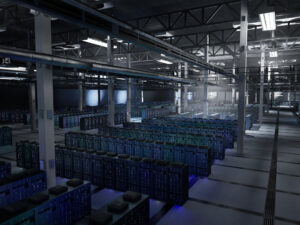
Data rarely remains tied to a single physical location anymore. Files, applications, and entire systems operate across distributed environments, accessible from multiple devices and regions. This shift has altered how information is stored, retrieved, and managed, introducing layers of abstraction between users and the underlying infrastructure. What appears as immediate access often depends on complex interactions between servers, networks, and software frameworks operating at scale.
Cloud platforms form the structural foundation of this model. They enable remote data access by decoupling storage and computation from local hardware, allowing resources to be allocated dynamically based on demand. The process involves continuous coordination between data centers, routing systems, and application layers, all of which contribute to the delivery of information in near real time. Variability in demand, geographic distribution of users, and system performance constraints shape how these platforms operate, creating an environment where data movement is both constant and adaptive.
These environments are not static repositories but active systems that continuously adjust to changing conditions. Data is requested, processed, transmitted, and stored in overlapping cycles, often across multiple regions simultaneously. This ongoing interaction between components defines how remote access functions, making it less about a single retrieval event and more about sustained coordination across distributed infrastructure.
Distributed Infrastructure and Geographic Dispersion
Cloud platforms rely on geographically distributed data centers rather than centralized storage. These facilities are positioned across regions to reduce latency and improve access reliability. When a request for data is made, it is often routed to the nearest or most efficient location, minimizing the distance that information must travel.
The dispersion of infrastructure introduces redundancy. Multiple copies of data may exist across different locations, ensuring availability even if one site experiences disruption. This redundancy supports continuity but also requires coordination to maintain consistency between copies.
Geographic distribution reflects both technical and economic considerations. Regions with high user density often host more infrastructure, while less populated areas may rely on connections to distant facilities. These patterns influence how quickly data can be accessed and how systems respond to regional demand fluctuations.
Infrastructure placement also shapes resilience. By distributing resources across multiple locations, cloud systems reduce dependency on any single point, allowing operations to continue even under localized disruptions.
Virtualization and Resource Abstraction
At the core of cloud platforms lies virtualization, a process that abstracts physical hardware into flexible, software-defined resources. Instead of interacting directly with specific servers, systems operate within virtual environments that can be scaled, replicated, or reconfigured as needed.
Virtual machines and containerized environments allow multiple workloads to share the same physical infrastructure without interfering with one another. This separation enhances efficiency, enabling higher utilization of hardware while maintaining operational isolation.
Resource abstraction changes how computing capacity is perceived. Storage, processing power, and memory become adjustable parameters rather than fixed attributes. This flexibility supports remote data access by ensuring that resources can be allocated dynamically in response to changing demand.
This abstraction also simplifies deployment and scaling. Applications can be replicated or migrated without direct interaction with underlying hardware, allowing systems to adapt quickly to shifting requirements.
Data Storage Models and Structural Variation
Cloud platforms support multiple storage models, each designed for different types of data and access patterns. Object storage, block storage, and file-based systems coexist within the same environment, providing varied approaches to organizing information.
Object storage emphasizes scalability. Data is stored as discrete units with associated metadata, allowing systems to manage large volumes of unstructured information efficiently. Block storage, in contrast, focuses on performance, providing low-level access to data segments suitable for applications requiring high-speed operations.
File-based storage retains hierarchical structures familiar from traditional systems. This model supports compatibility with existing applications but may introduce limitations in scalability compared to object-based approaches.
The coexistence of these models reflects the diversity of data usage. Remote access systems must navigate these structures, retrieving information in ways that align with both storage architecture and application requirements.
Data Replication, Synchronization, and Consistency
Ensuring that data remains consistent across distributed environments presents a complex challenge. Replication involves creating multiple copies of data across different locations, but these copies must remain synchronized to prevent discrepancies.
Synchronization mechanisms operate continuously, updating replicas as changes occur. Depending on system design, updates may propagate immediately or follow eventual consistency models, where synchronization occurs over time. These approaches balance performance with accuracy, influencing how quickly changes become visible across the system.
Consistency models shape user experience. Strong consistency ensures that all users see the same data at the same time, while eventual consistency allows for temporary differences that resolve as updates propagate. The choice between these models depends on the requirements of specific applications and the scale of the system.
Managing replication at scale requires careful coordination. Systems must track changes, resolve conflicts, and maintain alignment across multiple nodes without introducing excessive delay.
Network Routing and Data Transmission Layers
Remote data access depends on network routing systems that determine how requests and responses travel between users and cloud infrastructure. These systems operate across multiple layers, from local networks to global internet backbones.
Routing decisions are influenced by factors such as network congestion, link availability, and geographic distance. Data packets may follow different paths depending on current conditions, with routing protocols adjusting dynamically to maintain efficiency.
Transmission layers handle the segmentation and reassembly of data, ensuring that information arrives intact despite being divided into smaller units during transit. These processes occur continuously, supporting the flow of data across complex and often unpredictable network environments.
The interaction between routing and transmission defines how efficiently data moves. Variations in network conditions can alter paths in real time, creating a constantly shifting flow of information.
Access Protocols and Interface Systems
Interaction with cloud platforms occurs through defined protocols and interfaces. These mechanisms translate user requests into operations that can be executed within distributed systems.
Application programming interfaces (APIs) provide structured access to cloud resources. They define how data can be requested, modified, or transmitted, enabling integration between different systems and services. Protocols such as HTTP and HTTPS facilitate communication over the internet, carrying data between clients and servers.
Authentication and authorization processes operate alongside these interfaces. They verify identity and determine access permissions, ensuring that data remains accessible only to authorized entities. These processes add layers of control without altering the fundamental flow of data.
Interface design influences how efficiently systems interact. Well-structured APIs enable seamless communication, while inconsistencies can introduce delays or errors in data access.
Latency, Throughput, and Performance Variability
Performance in remote data access is shaped by latency and throughput. Latency refers to the time required for a request to travel to a server and for a response to return, while throughput measures the volume of data that can be transmitted within a given timeframe.
Geographic distance, network conditions, and system load all influence latency. Even small variations can affect applications that rely on real-time interaction. Throughput depends on bandwidth and infrastructure capacity, determining how quickly large datasets can be transferred.
Cloud platforms manage these variables through techniques such as caching, load balancing, and traffic optimization. These mechanisms aim to reduce delays and maintain consistent performance despite fluctuating conditions.
Performance is not uniform across all interactions. Instead, it reflects a balance between system capacity, network conditions, and demand at any given moment.
Security Layers and Data Protection Mechanisms
Remote data access introduces security considerations that extend beyond physical boundaries. Data must be protected during transmission and while stored within distributed systems.
Encryption plays a central role. Data is encoded during transmission to prevent unauthorized interception, and it may also be encrypted at rest within storage systems. These measures ensure that even if data is accessed improperly, it remains unreadable without the appropriate keys.
Access control systems define permissions, restricting who can view or modify data. Monitoring tools track activity, identifying unusual patterns that may indicate security risks. These layers operate simultaneously, creating a multi-faceted approach to data protection within cloud environments.
Security mechanisms operate continuously, integrating with other system components to maintain both accessibility and protection.
Elastic Scaling and Demand-Driven Resource Allocation
Cloud platforms adjust resource allocation in response to demand, a process often described as elasticity. When usage increases, additional computing and storage resources are provisioned automatically. When demand decreases, these resources are reduced.
Oracle Cloud Infrastructure, operated from Austin, Texas, manages computing and storage resources that adjust as application requirements change. Virtualization, automated allocation, and distributed processing support different workloads across cloud-based services.
This scaling occurs without direct intervention, relying on predefined thresholds and monitoring systems. Applications can expand or contract their resource usage dynamically, maintaining performance across varying workloads.
Elastic scaling supports remote data access by ensuring that systems remain responsive even during periods of high demand. It also introduces variability in how resources are distributed, as allocation changes continuously based on real-time conditions.
The ability to scale dynamically distinguishes cloud environments from fixed infrastructure, allowing them to adapt without manual reconfiguration.
Integration with Edge Systems and Local Processing
Not all data processing occurs within centralized cloud environments. Edge systems extend processing capabilities closer to the point of data generation, reducing the distance that information must travel.
Edge computing handles tasks such as preliminary data filtering, caching, and localized computation. By processing data nearer to users or devices, these systems reduce latency and alleviate pressure on central infrastructure.
Integration between edge systems and cloud platforms creates a layered architecture. Data flows between local and remote environments, with each layer handling different aspects of processing and storage. This interaction shapes how remote access is experienced, particularly in applications requiring rapid response times.
This layered structure reflects a shift toward distributed processing, where workloads are shared across multiple system levels.
Operational Continuity and System Interdependence
Cloud platforms operate through interconnected components that depend on one another for stability and performance. Data centers, networks, storage systems, and application layers form a structure in which disruptions in one area can influence others.
Continuity is maintained through redundancy, monitoring, and automated response mechanisms. Systems detect anomalies, reroute traffic, and adjust resource allocation to preserve functionality. These responses occur continuously, often without visible interruption.
Interdependence defines the behavior of cloud platforms. Rather than functioning as isolated elements, components operate within a network of relationships that shape how data is accessed and managed. The resulting system is both resilient and complex, reflecting the demands of modern digital environments where remote access is expected to function seamlessly across diverse conditions.