
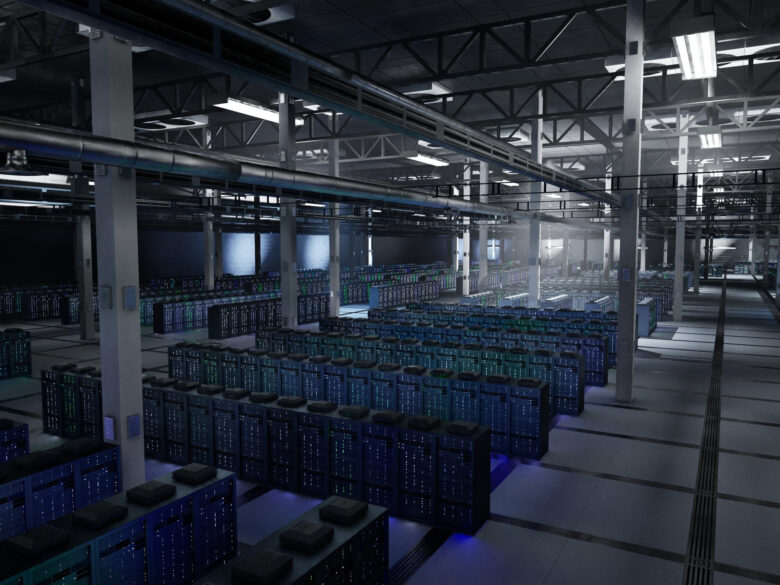
Activity over computerized circumstances does not halt between instinctive. Systems continue to plan requests, favor data, overhaul internal states, and communicate over frameworks without a doubt when no facilitate input is unmistakable. What appears up as sit out of adapt time at the surface level routinely reflects a move from user-driven activity to system-driven coherence. Establishment shapes keep up course of action, resolve conditions, and arrange for future interactions.
This tirelessness is not coincidental. It is pivotal to how progressed establishments work. Tireless operation ensures that systems remain responsive, solid, and competent of altering to changing conditions. It requires coordination over passed on components that work with unmistakable speeds and obligations. Each component contributes to a shared operational stream that must remain unfaltering in fact as ask fluctuates.
As computerized natural frameworks expand, the want of nonstop execution heighten. Systems must handle changeability without obstructions, keeping up both interior coherence and exterior responsiveness. The complexity of this errand increases with scale, requiring disobedient that screen, change, and back activity in honest to goodness time.
Looking more closely at tireless operation appears that availability alone does not portray system condition. A benefit can stay dynamic while response time increases, resource utilization moves toward its limits, or communication between components gets to be less dependable. These changes may happen some time recently clients see a total interruption, making execution data an critical portion of understanding system behavior.
This distinction gets to be more important as the number of components grows. Each extra benefit, database, communication pathway, or outside condition can include another point where timing and capacity must stay adjusted. Tirelessness in this way depends not as it were on keeping components running but on keeping their associations usable underneath changing load.
Distributed Coherence Over System Layers
Execution in computerized circumstances is scattered over distinctive layers that work at the same time. Application organizations, databases, organize system, and hardware resources work in parallel, each keeping up its claim cycle of activity. These layers do not hold up for one another in a strict course of action. Instep, they related through advancing exchanges that back continuity.
Persistence rises from this cover. One handle completes though another begins, regularly enacted thus by internal signals. This chaining of activity makes an environment where operations appear up reliable, undoubtedly in show disdain toward of the reality that they are scattered over separated components.
Modern cloud stages give a unmistakable illustration of this structure, where application administrations, databases, and capacity frameworks proceed working at the same time over numerous framework layers.
Cloud operation makes these conditions less unmistakable at the surface. An application may appear up as one benefit to a client whereas its operation depends on compute resources, storage, databases, organize pathways, and other administrations underneath. A slowdown in one layer does not continuously halt the application, but it can alter the execution experienced somewhere else.
This is one reason execution issues can be troublesome to follow. The component where a delay gets to be obvious may not be the component where it started. Following activity over layers gives a clearer see of how a neighborhood issue moves through a dispersed environment.
Differences in planning speed and capacity display changeability into this structure. A few layers respond quickly, while others require more time to add up to assignments. Ceaseless operation depends on altering these contrasts so that delays in one layer do not exasperate the for the most part system.
Temporal Cover and Non-Linear Execution
Processes spread out over covering timeframes or possibly than taking after a single, coordinate way. Errands begin a few time as of late past operations have totally concluded, given that conditions are satisfactorily settled. This covering execution increases adequacy by diminishing sit out of adapt periods and maximizing resource utilization.
Non-linear execution presents complexity in directing conditions. Systems must choose when fragmentary completion is satisfactory to allow ensuing shapes to proceed. These choices are based on internal rules that characterize commendable conditions for continuation.
Covering activity moreover implies that completion time and begin time do not continuously give a full picture of execution. One prepare may be holding up for information whereas another proceeds with work that does not depend on that information. This permits capacity to stay dynamic instead of sitting unused through each delay.
The hazard shows up when these conditions are not accurately understood. A prepare that proceeds as well early may work with fragmented information, whereas one that holds up longer than required can make unnecessary delay. The appropriate point of continuation depends on what information or state the following operation actually requires.
When timing associations move, the stream of execution can gotten to be uneven. Delays may cause assignments to collect, though quick completion in other zones can make cleft. Systems must modify effectively, redistributing activity to keep up a dependable operational flow.
Resource Components Underneath Energetic Load
Continuous operation places kept up weight on system resources. Planning units, memory task, and organize capacity must reinforce persistent activity without debasement. Resource utilization shifts, reflecting changes in ask and operational conditions.
Streaming stages regularly encounter these variances amid major live occasions, when asset request can increment quickly over huge numbers of concurrent users.
Live occasions give a valuable case since request can move inside a brief period or maybe than developing gradually. Compute, network, storage, and delivery resources may all experience changing load at the same time. The challenge is not basically having capacity, but making that capacity accessible where request is actually increasing.
Dynamic assignment disobedient redistribute resources in response to these changes. Systems screen utilization plans and modify capacity where required, ensuring that essential shapes get satisfactory support. This redistribution happens ceaselessly, routinely without arrange visibility.
Resource checking consequently needs to look at more than normal utilization. A system can show acceptable normal load whereas brief peaks still cause queues or delays. Watching peak request, response time, error behavior, and available capacity together gives a more valuable see of whether resources can absorb variation.
Imbalances can still create. When ask outperforms available resources, delays finished up unavoidable. Systems must at that point choose how to prioritize shapes, altering incite needs against long-term stability.
Soundness Interior Tireless Execution
Maintaining strength in the midst of persistent operation requires reliable modification. Systems work in circumstances where conditions progress rapidly, affected by exterior inputs, inward shapes, and establishment execution. Strength is not a settled state but a condition that must be viably sustained.
Monitoring rebellious donate the information imperative to direct this get ready. They track execution pointers such as response times, goof rates, and resource utilization. When deviations happen, systems respond by modifying execution plans, reallocating resources, or altering plan priorities.
These pointers become more useful when watched together. Higher response time with steady resource utilization may point toward a distinctive condition than higher response time happening beside exhausted compute or memory capacity. No single metric gives a total portrayal of the system.
Changes over time moreover matter. A short spike may disappear without intervention, whereas a gradual movement in error rate or latency can show that normal operating conditions are changing. Looking at both immediate values and longer patterns makes monitoring more capable of separating temporary variation from persistent degradation.
The scale of the system impacts how these changes are actualized. In humbler circumstances, changes may be localized and fast. In greater systems, changes must be encouraged over various components, each with its claim confinements and dependencies.
Feedback circles play a central portion in this coordination. Data collected from watching systems enlightens choices around how to alter. These circles work diligently, allowing systems to respond to changes as they happen. In any case, feedback is not prompt. Delays in data collection or planning can impact the precision of modifications, showing additional complexity.
Thresholds characterize palatable ranges for system behavior. When conditions outperform these limits, medicinal exercises are actuated. These exercises point to reestablish alter without preventing advancing operations. The ampleness of these limits depends on how accurately they reflect system components underneath moving conditions.
Threshold choice introduces another adjust. A limit that reacts to each brief change can make unnecessary activity, whereas one that permits as well much variation may recognize a issue after execution has already declined. Limits work best when they reflect the behavior and timing of the particular component being observed.
Stability in addition depends on managing brilliantly between components. Changes in one parcel of the system can affect others, particularly in significantly interconnected circumstances. Systems must account for these cleverly when making modifications, ensuring that neighborhood changes do not make broader disruptions.
Adaptation is in this way determined. Systems do not return to a inert design but instep work interior a lively run of conditions. Dauntlessness is finished by keeping up this run, allowing for assortment though expecting speeding up into failure.
Data State Consistency Over Determined Processes
Data consistency is a central concern in diligently working systems. Information is overhauled in honest to goodness time, routinely over various ranges. Ensuring that all components reflect exact and synchronized data requires ceaseless coordination.
State organization components track changes and cause updates over the system. These disobedient work ceaselessly, pleasing contrasts and settling clashes that may rise from concurrent updates.
Different copies or representations of information may not alter at precisely the same minute. Communication delay, processing time, and concurrent activity can make short periods where components observe distinctive states. Whether this is acceptable depends on the operation being performed and how quickly agreement needs to be restored.
Some operations can tolerate brief differences without a visible effect, whereas others depend on a more current state before proceeding. The required level of consistency consequently becomes portion of system design instead of a condition that can be treated identically over every process.
Inconsistencies can still happen, particularly when redesigns are put off or when systems work with midway information. Managing these abnormalities incorporates altering the require for accuracy with the require for responsiveness. Provoke consistency may not ceaselessly be achievable, requiring systems to persevere brief discrepancies.
Monitoring and Free Oversight
Continuous operation depends on systems that observe and coordinate development without arrange intervention. Checking systems collect data around execution, recognize irregularities, and grant encounters that coordinate modifications. These systems work as an embedded layer of oversight.
Data center checking situations outline this prepare by persistently following equipment execution, arrange movement, and benefit accessibility without coordinate administrator involvement.
Google’s information center operations in The Dalles, Oregon, depend on ceaseless observing to oversee computing assets, cooling conditions, and benefit execution. These forms offer assistance keep up the soundness of advanced foundation that underpins applications and online administrations utilized over diverse environments.
Large information center operation gives a concrete see of why monitoring must extend past computing equipment alone. Server activity, network conditions, electrical supply, cooling, and facility conditions can influence one another. Keeping digital services available therefore depends on both computing resources and the physical environment supporting them.
Google has publicly documented information center infrastructure and efficiency work, including its use of monitoring and control around computing and cooling systems. The value of this example is in the connection between physical facility conditions and digital service operation, where changes in one layer can influence available capacity and stability in another.
Observation extends over diverse estimations. It consolidates taking after get ready execution, resource utilization, and interaction plans between components. This information shapes the preface for keeping up course of action and recognizing potential issues.
Autonomous oversight presents its claim demands. Systems must allocate resources to checking shapes, ensuring that recognition does not interfered with basic operations. The alter between perceivability and efficiency is a characterizing characteristic of ceaseless environments.
Monitoring itself can moreover fail or provide an incomplete picture. Missing measurements, delayed reports, or a checking service that depends on the same failing infrastructure can reduce visibility precisely when it is most required. Independent observation pathways can decrease this condition for more critical components.
Failure Control in Resolute Environments
Failures are unavoidable, undoubtedly in systems arranged for tireless operation. The center shifts from shirking to control and recovery. Systems must recognize issues quickly and isolated their influence, dodging unsettling influence from spreading.
Containment depends on recognizing boundaries interior the system. These boundaries characterize how components related and where partition can be associated. Fruitful control grants unaffected components to continue working while issues are addressed.
Distributed applications habitually depend on this approach, separating benefit disturbances to person components whereas permitting unaffected parts of the framework to stay operational.
Failure boundaries become particularly important where numerous administrations depend on one another. If every component depends on the same shared resource, a problem inside that resource can move over what otherwise appear to be separated services. Isolation therefore depends on understanding common dependencies as well as visible application boundaries.
Recovery happens adjacent persistent activity. Shapes may be restarted, data reprocessed, or affiliations reestablished without finishing the entirety system. This approach stick movement though tending to essential problems.
Recovery speed is not the only measure of effectiveness. Systems moreover need to consider whether data remained correct, whether unfinished work must be repeated, and whether the original condition that caused the failure has been removed. Restoring activity without resolving the underlying condition can return the system to the same failure path.
Adaptive Reconfiguration and Essential Flexibility
Digital systems progress diligently, changing their structure and behavior in response to changing conditions. Flexible reconfiguration grants systems to modify how components related, redistribute workloads, or overhaul internal parameters without ruining operation.
These changes are frequently mechanized, driven by predefined rules or real-time examination. Systems survey current conditions and choose how to modify in organize to keep up execution and stability.
Reconfiguration can involve moving work between available resources, adding capacity, reducing unnecessary activity, or changing how requests travel through the system. The suitable reaction depends on whether the original condition comes from demand, component failure, network behavior, or another dependency.
Automation makes these alterations quicker but moreover places more significance on the rules that start them. A rule based on incomplete or delayed information can make a change that is technically valid for an older system state but less appropriate for current conditions.
Flexibility presents complexity. Each reconfiguration changes the associations between components, conceivably making unused conditions or altering existing ones. Systems must direct these changes carefully to keep up a key remove from unintended consequences.
Interconnected Conditions and Operational Cohesion
Continuous operation depends on the course of action of various interconnected systems. Conditions interface components together, making a organize of associations that must remain consistent. These associations characterize how shapes associated and how information flows.
Cohesion creates from the dependable behavior of these conditions. Systems must encourage their exercises, ensuring that instinctive remain obvious in fact as conditions modify. This coordination is not dormant but progresses as systems adapt.
Mapping these conditions can make complex failures easier to understand. A component may appear healthy when examined alone while still producing poor results because an upstream service is delayed or a downstream resource has reached its limit. Operational cohesion therefore depends on the complete path taken by work and information.
Shared dependencies deserve particular consideration. Different administrations can appear isolated at the application level while depending on the same database, network route, storage system, or physical infrastructure underneath. These shared points can become broader sources of disruption if they are not recognized.
Interdependence increases both capability and complexity. It enables advanced convenience but additionally requires cautious organization to keep up soundness. Determined operation depends on supporting this balance.
Interface Behavior and Seen Continuity
Interfaces serve as the point of interaction between clients and systems. They appear a unraveled see of complex operations, concealing the essential shapes that keep up coherence. Seen movement depends on how effectively these meddle reflect system behavior.
Online collaboration stages illustrate this relationship clearly, where interface responsiveness regularly depends on foundation synchronization forms that stay covered up from users.
A client may see a message, file, or status change as one simple action even though several backend operations happen around it. Information can be accepted by one component, stored, synchronized, and distributed before the same state becomes visible across other sessions or devices.
This creates a difference between acknowledged activity and fully propagated activity. An interface can confirm that a request was received before every related system has completed its work. Clear state handling helps prevent this short interval from appearing as unexplained inconsistency.
Latency and responsiveness affect acknowledgment. Undoubtedly minor delays can impact how coherence is experienced. Systems must ensure that inward shapes alter with interface wants, keeping up a relentless client experience.
This course of action requires coordination between backend operations and frontend presentation. Meddle must overhaul in response to system changes, reflecting current states without revealing essential complexity.
Technical Review and Sources
The operational forms examined here are considered through their connections between distributed execution, resource utilization, data consistency, monitoring, failure containment, recovery, reconfiguration, and interface responsiveness. These connections offer assistance clarify why continuous digital operation depends on coordination over both computer program and physical infrastructure.
The information center case is included as a real-world reference to associate these broader concepts with documented large-scale infrastructure. Google publishes information about its information centers, infrastructure, energy use, and approaches connected with facility and computing efficiency. Claims particular to an individual location ought to remain inside what Google or another primary source directly documents.
The broader examination does not expect that each cloud or streaming platform uses an identical architecture. Implementation changes between providers and workloads, whereas the operational concepts examined here describe common conditions that emerge when distributed components must remain active beneath changing demand.
Last technical review: September 2026
Sources reviewed: Google Data Centers; Google infrastructure and efficiency documentation; Google environmental and data center reporting.
References
Google. Data Centers.
Google. Discover Our Data Center Locations.
Google. Data Center Efficiency and Infrastructure Resources.